
Red River Parish Sex Offender Checks
Begin with the Louisiana State Police registry search. Its conditions must be accepted before searching, and the interface needs JavaScript and cookies. Red River Parish entries can also be reached through the sheriff-linked local interface. Search by a person's name when identity is known, or use address, city, and ZIP controls to examine a place. Internet-name, email, and phone searches serve narrower needs when the exact value is available.
The public registry is an awareness tool, not a certificate that a person or address is clear. Details can change between agency verification and online publication. Partial names can also return aliases or people with similar identifiers. Compare the photo, physical description, offense jurisdiction, and address before drawing a conclusion. For a time-sensitive question, contact the local registering agency or the State Police registry unit instead of relying on one screen.
Red River OffenderWatch Search
Red River Parish uses a parish-specific OffenderWatch route for its local view. The official local search source directs users toward the parish registry environment. It is useful when the question is tied to a Red River Parish name, street, school, workplace, or city. The state view remains valuable because it can account for records beyond one parish.
The local interface is not a separate criminal-history database. It publishes registration data supplied and maintained through the state and local registration process. A result does not show every arrest, court filing, or non-registry conviction. Likewise, the absence of a match does not establish that no criminal record exists.
The official State Police registry information page shown below identifies the state program behind local searches and gives users a route back to the responsible agency.
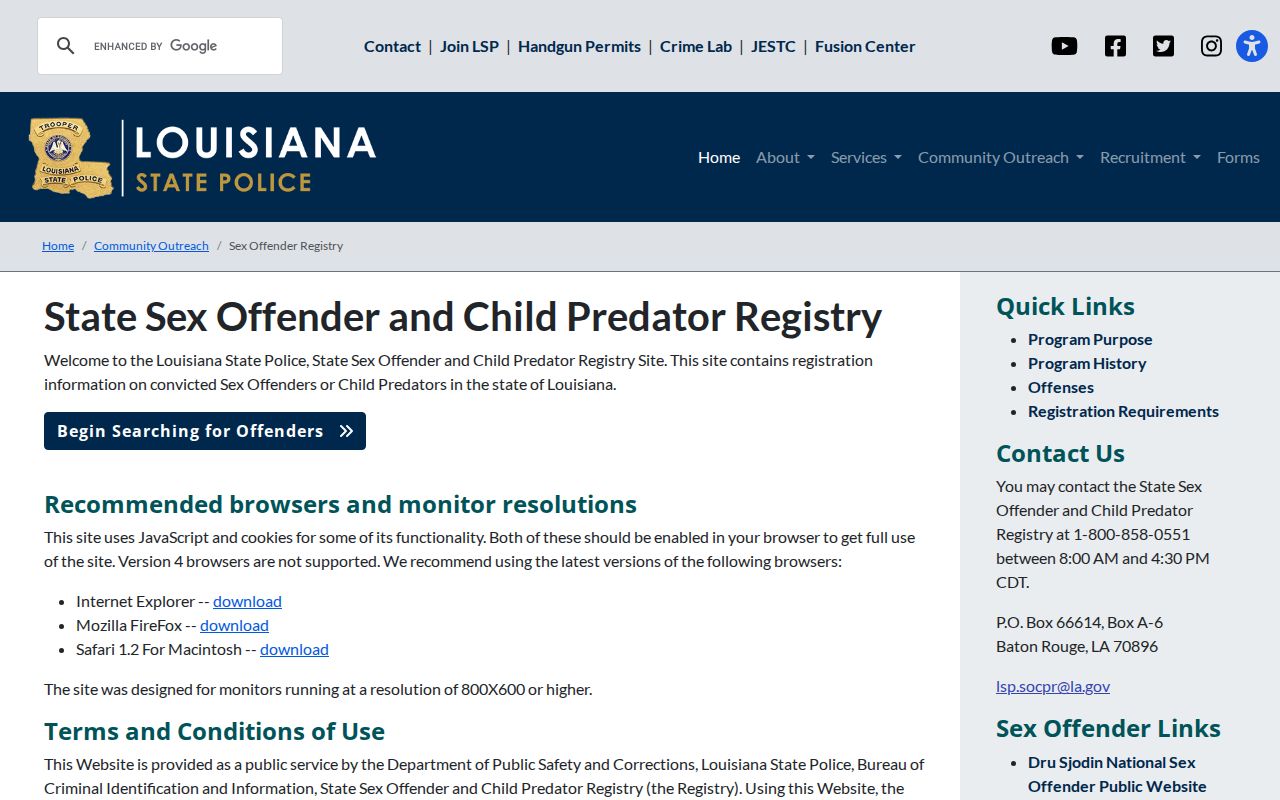
That state context matters when a local profile needs verification or when a registrant may have moved between Louisiana parishes.
Louisiana State Registry Searches
The Louisiana State Police State Sex Offender and Child Predator Registry supports several distinct search paths. Pick the field that best matches the question instead of filling every box. Name searches allow partial matches and aliases. Place searches can distinguish home, work or volunteer, and school addresses. Exact internet identifiers and phone numbers have their own modes.
- Open the official registry and accept its published conditions of use.
- Choose a name, location, internet identifier, or phone search.
- Review possible matches by identity, location, and visible status.
- Open the profile, then verify uncertain details with the registering agency.
| Field Label | Type | Required | Notes |
|---|---|---|---|
| Last and first name | Text | No | Partial names and aliases may match |
| Address, city, state, ZIP | Text | Varies | ZIP Plus is optional |
| Address type | Checkbox | No | Home, work or volunteer, and school |
| Internet name or email | Text | Exact value | Uses an exact-match search |
| Phone number | Text | Exact value | Uses an exact-match search |
| Non-compliant offenders | Action link | No | Opens a status-focused list |
Red River and National Results
The parish and statewide searches focus on Louisiana registration data. The National Sex Offender Public Website adds participating jurisdictions across the country. That makes NSOPW useful when a person recently crossed a state line, a past address lies elsewhere, or a safety check spans more than Louisiana.
These tools answer related but different questions. The Red River Parish interface is best for a local place. Louisiana's registry supplies state program context. NSOPW broadens the geographic sweep, but each participating jurisdiction remains responsible for its own data. Search both layers when movement is relevant, then confirm any match through the jurisdiction named on the profile.
The official national search source is represented in the capture below.
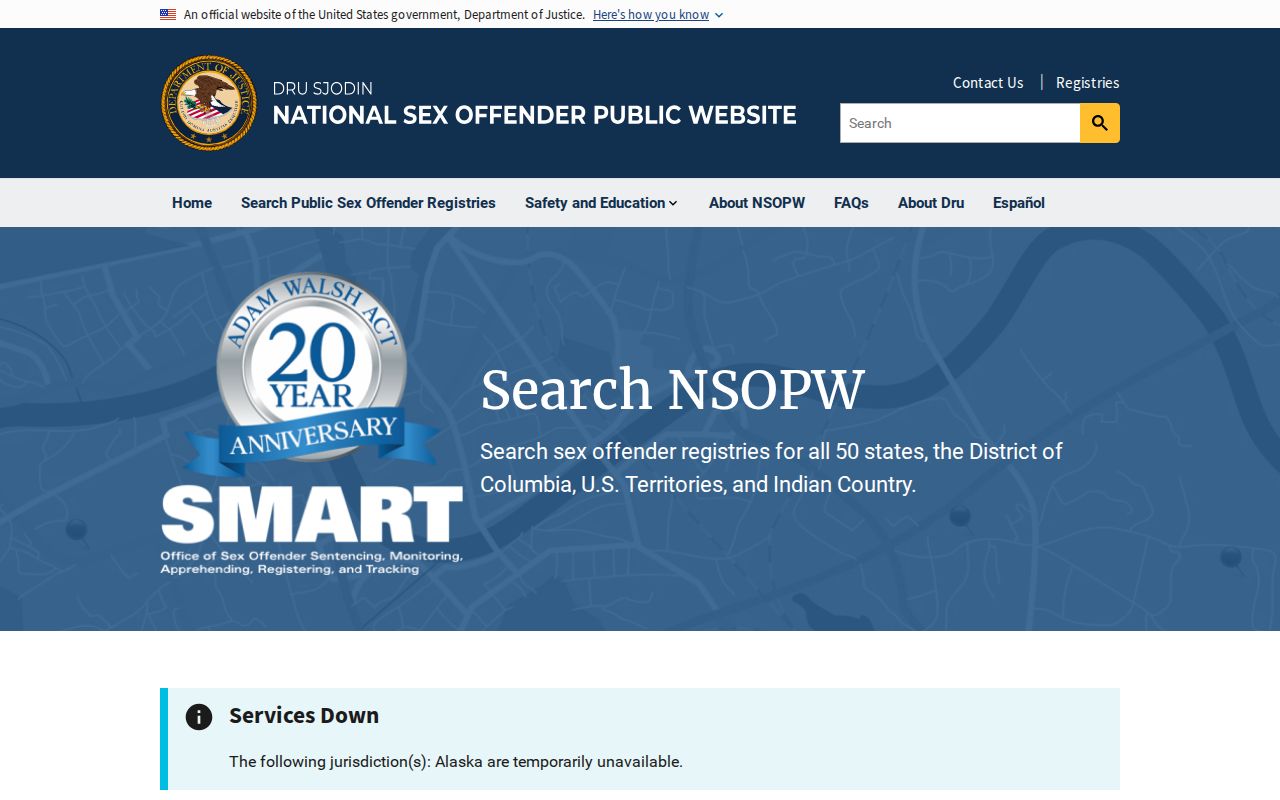
Its broader reach does not turn a national no-hit into proof that no registration duty exists.
Registry Profiles: What They Show
A public profile may combine identity, location, offense, and compliance fields, but not every profile contains every category. Read the offense date and jurisdiction with the statute and conviction details. Those fields help separate the conduct underlying registration from later residence or verification information. Never infer a tier, current charge, or custody status from a single label.
| Name and aliases | Published identity names and known alternate names |
|---|---|
| Photo and description | Image plus available physical traits |
| Addresses | Published home, work or volunteer, and school locations when available |
| Offense and statute | Offense, jurisdiction, statute, and conviction details that may vary by file |
| Vehicles and markings | Available vehicle data and scars, marks, or tattoos |
| Compliance | The status shown by the registry, subject to agency confirmation |
Red River Address Alerts
OffenderWatch supports address-based notification enrollment. Enter a street address rather than a post office box, then supply city, state, ZIP, email, and email confirmation. The enrollment also requires acknowledgement of the Notification Contract. The system says confirmation should arrive within 24 hours. The reviewed interface did not publish numeric radius choices, so users should follow the current on-screen options without assuming a fixed distance.
Alerts supplement direct searches. They can help with ongoing community awareness after an address is enrolled, while a name or map search answers an immediate question. Keep the confirmation message and check spam filtering if it does not appear. For urgent safety concerns, use law enforcement channels rather than waiting for an automated notice.
Registration Levels and Duties in Louisiana
Louisiana Revised Statutes 15:542 and 15:544 govern core registration duties and duration. A new Louisiana resident who must register generally has to appear in person within three business days. Duration depends on the statutory category and case facts. Time can toll, and a possible reduction requires strict clean-record and treatment conditions. The public should not assign a tier solely from a brief registry label.
| Statutory category | Duration | Important limit |
|---|---|---|
| Ordinary or Tier I category | 15 years from initial Louisiana registration | Tolling and case facts may alter the calculation |
| Minor-victim or Tier II category | 25 years | Do not assign the category from a label alone |
| Aggravated, sexually violent, repeat, and listed categories | Life | Statutory classification controls |
When Red River Shows No Hit
A no-hit can mean the spelling, alias, location, or search mode did not match. It can also reflect a move, a reporting delay, or a record held by another participating jurisdiction. Try a partial last name, repeat the search with a known alias, and use city or ZIP controls. If interstate history is plausible, run the same identifiers through NSOPW.
A no-hit is not a background clearance and says nothing about criminal matters that do not require registration. Court files, arrest records, and the registry have different scopes. Readers examining a filed prosecution should use the parish court case lookup for the case record rather than treating registry results as a substitute.
Report Red River Address Concerns
Do not confront a listed person when an address or compliance detail looks wrong. Save the public profile URL or note the name, displayed location, and the detail that appears inconsistent. Then contact the Red River Parish Sheriff's Office at 318-932-4221 or the Louisiana registry unit at 1-800-858-0551. The state line is staffed from 8:00 a.m. to 4:30 p.m. Central time.
The registration agency can compare the report with its current file and decide whether follow-up is needed. Public users cannot determine compliance from a drive-by check or a stale screen. The statutory registration duties are summarized in the official Louisiana law source captured below.
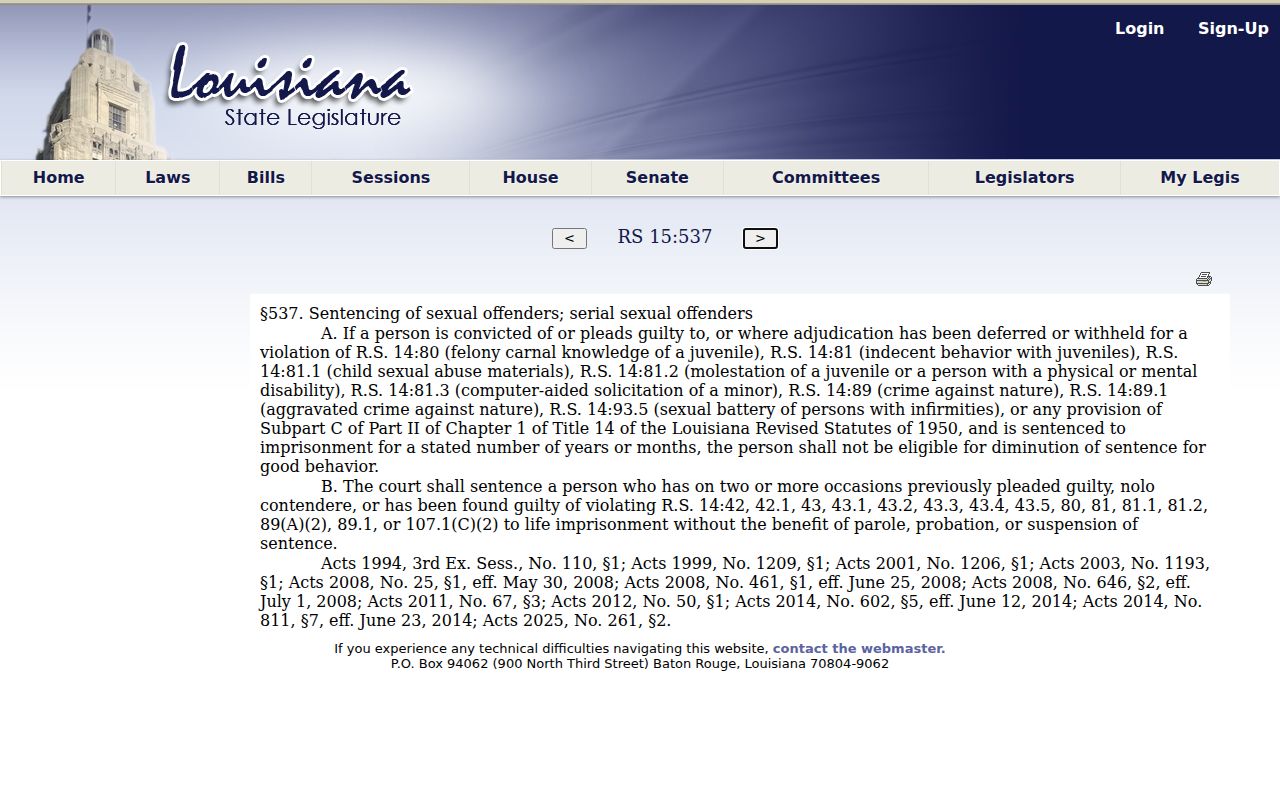
The law is the source for required conduct; the public profile is only the visible record of agency data.
Using Registry Information Lawfully
Registry information supports personal, family, and community safety planning. Use it to understand the public facts, enroll an address for notices, and ask the registering agency to verify uncertain data. It does not authorize threats, intimidation, harassment, or direct enforcement by members of the public. Report a concern to law enforcement and allow the responsible agency to investigate.
Use the registry lawfully: Louisiana warns that threats, intimidation, or harassment based on registry information can lead to criminal prosecution and civil liability. Never confront a registrant or household.
Louisiana's duration statute is available from the state legislature. The official source capture below shows the statutory framework used for the fifteen-year, twenty-five-year, and lifetime categories.
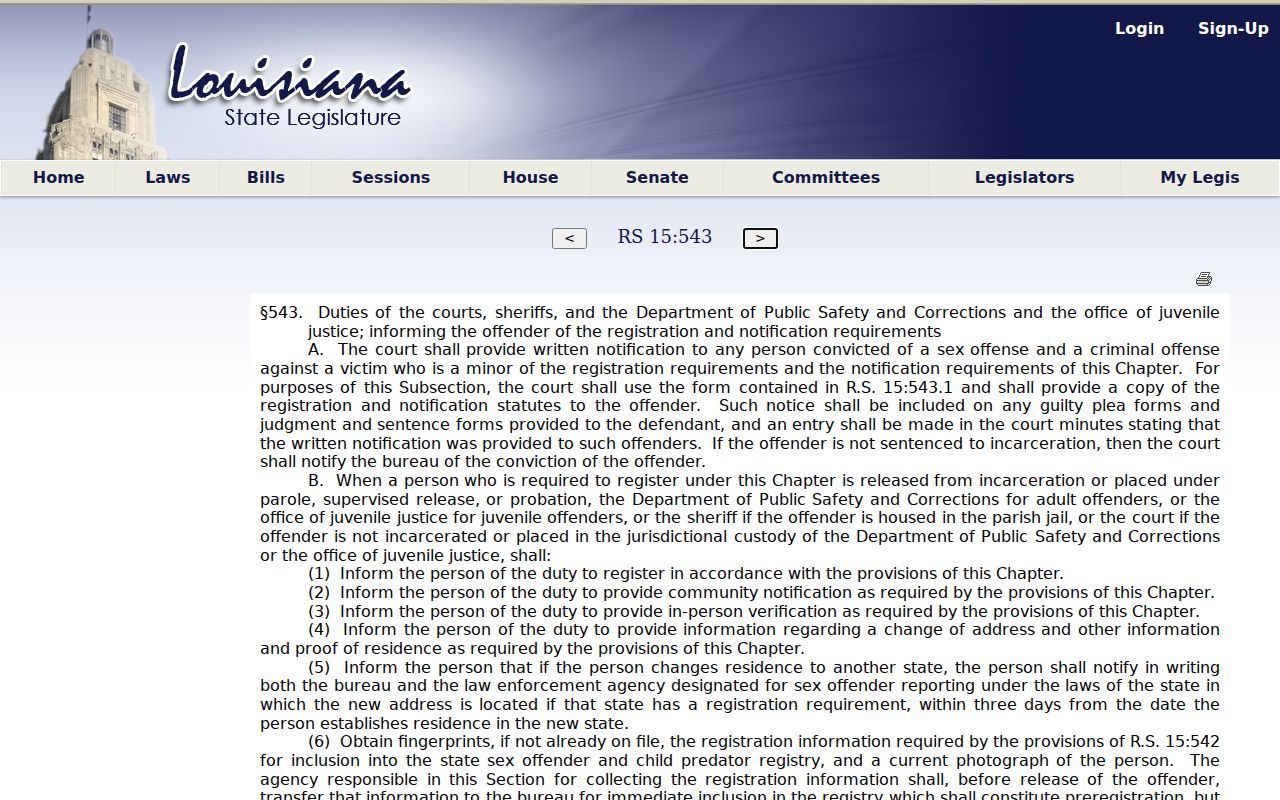
Because statutory exceptions and tolling matter, duration should be confirmed from the case and agency record.